Published: November 13, 2025 • 5 min read • By UPLYNK
Low-Code, No-Code: The Future of Business Innovation
As workplaces continue to transform, teams are increasingly distributed, mobile and digitally connected. Businesses now need to adapt faster by building tools that drive productivity, collaboration and operational efficiency.
Low-code development enables this agility by simplifying how apps are built. Using intuitive drag-and-drop functionality, prebuilt templates and visual logic, low-code platforms let users design apps that solve business problems without needing full-scale programming.
By enabling citizen developers to build apps, businesses can offload routine development tasks and allow IT teams to focus on innovation and complex challenges.
The Benefits of Low-Code Development
Low-code platforms deliver measurable advantages for organizations across industries:
- Efficiency: Build and deploy applications faster using prebuilt components and intuitive workflows.
- Flexibility: Create and adapt apps that align with specific business needs as priorities evolve.
- Responsiveness: Quickly pivot and deploy new digital solutions in response to market changes.
- Iterability: Continuously improve apps with rapid testing, feedback and iteration.
These benefits empower both business users and developers to collaborate, innovate and accelerate digital transformation while keeping costs low and development cycles short.
Low Code vs. No Code: What’s the Difference?
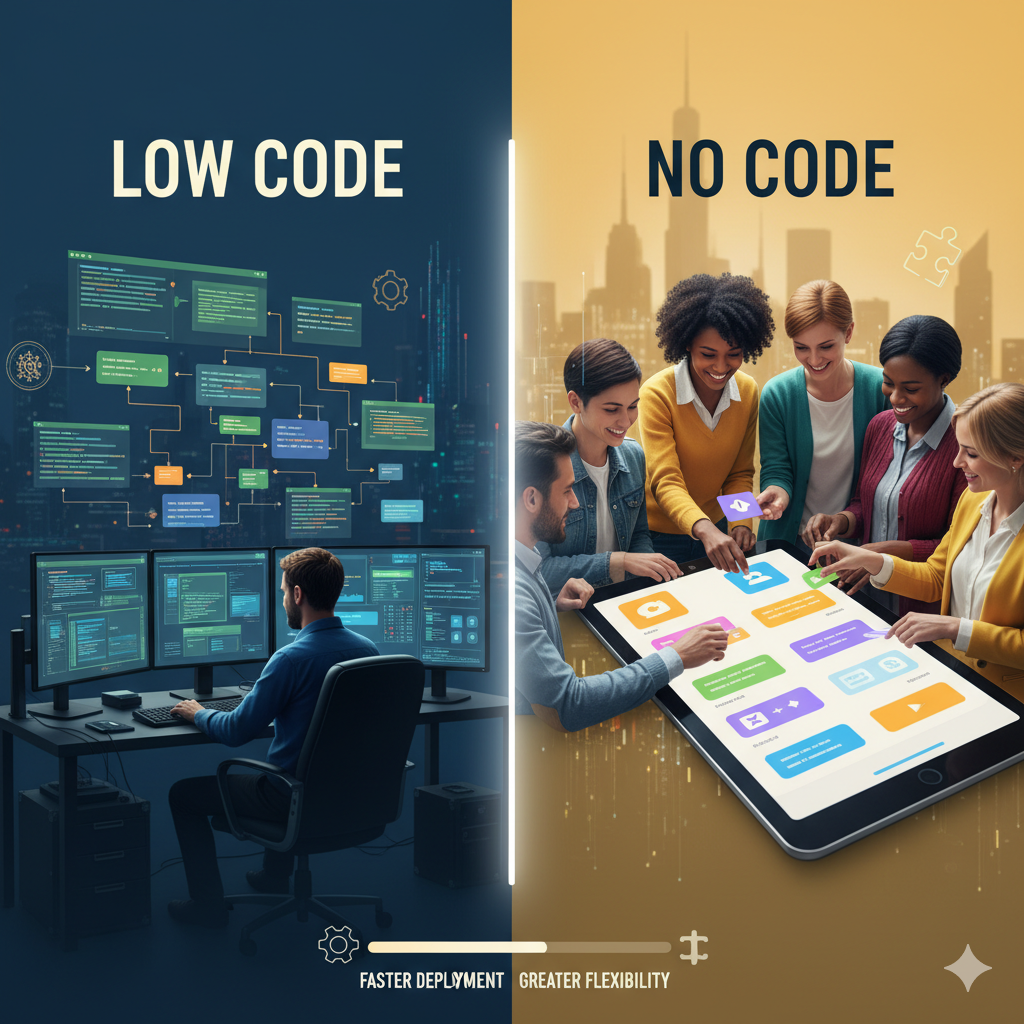
While low-code and no-code platforms share a common goal of simplifying app creation, they differ in their approach and target audience.
Low Code
- Ideal for both professional developers and business users.
- Allows customization with minimal hand-coding.
- Provides flexibility and control for scalable, complex solutions.
No Code
- Perfect for users with little to no technical background.
- Enables fast app creation using prebuilt templates and logic blocks.
- Best suited for simple, task-specific applications.
The choice between low-code and no-code depends on your goals. If you need speed and simplicity, no-code offers instant results. For scalability, integration and customization, low-code provides the right balance of speed and power.
What Can You Build with LCNC Platforms?
The possibilities with low-code and no-code tools are virtually limitless. Organizations use these platforms to streamline workflows and automate daily operations. Examples include:
- Conference and event apps with interactive agendas and feedback forms.
- Procurement and approval workflows to replace paper-based systems.
- Employee onboarding and training management apps.
- Delivery tracking or operations dashboards for logistics efficiency.
By putting app-building power directly in the hands of business users, LCNC platforms foster a culture of innovation and agility.
When to Go Low-Code or No-Code
Your choice depends on your organization’s objectives and resources:
- Choose no-code for quick, simple apps that solve targeted business challenges.
- Choose low-code for projects that demand scalability, integrations or IT collaboration.
Whether you’re a startup looking to move fast or an enterprise modernizing legacy systems, low-code and no-code platforms give everyone the power to create.
Conclusion
Low-code and no-code platforms represent not only a new way to develop apps but also a shift in how businesses innovate. By empowering people across all departments to build, automate and optimize, LCNC tools close the gap between ideas and execution.
At UPLYNK, we believe this movement is redefining digital transformation by enabling teams to work smarter, faster and grow together.😊
“At UPLYNK, we’re committed to empowering the Microsoft Dynamics 365 community through insightful blogs, practical tutorials and real-world implementation guidance — helping professionals learn, grow and stay ahead in the ever-evolving D365 ecosystem.”